
Why Layered Planting Matters in Vancouver Gardens
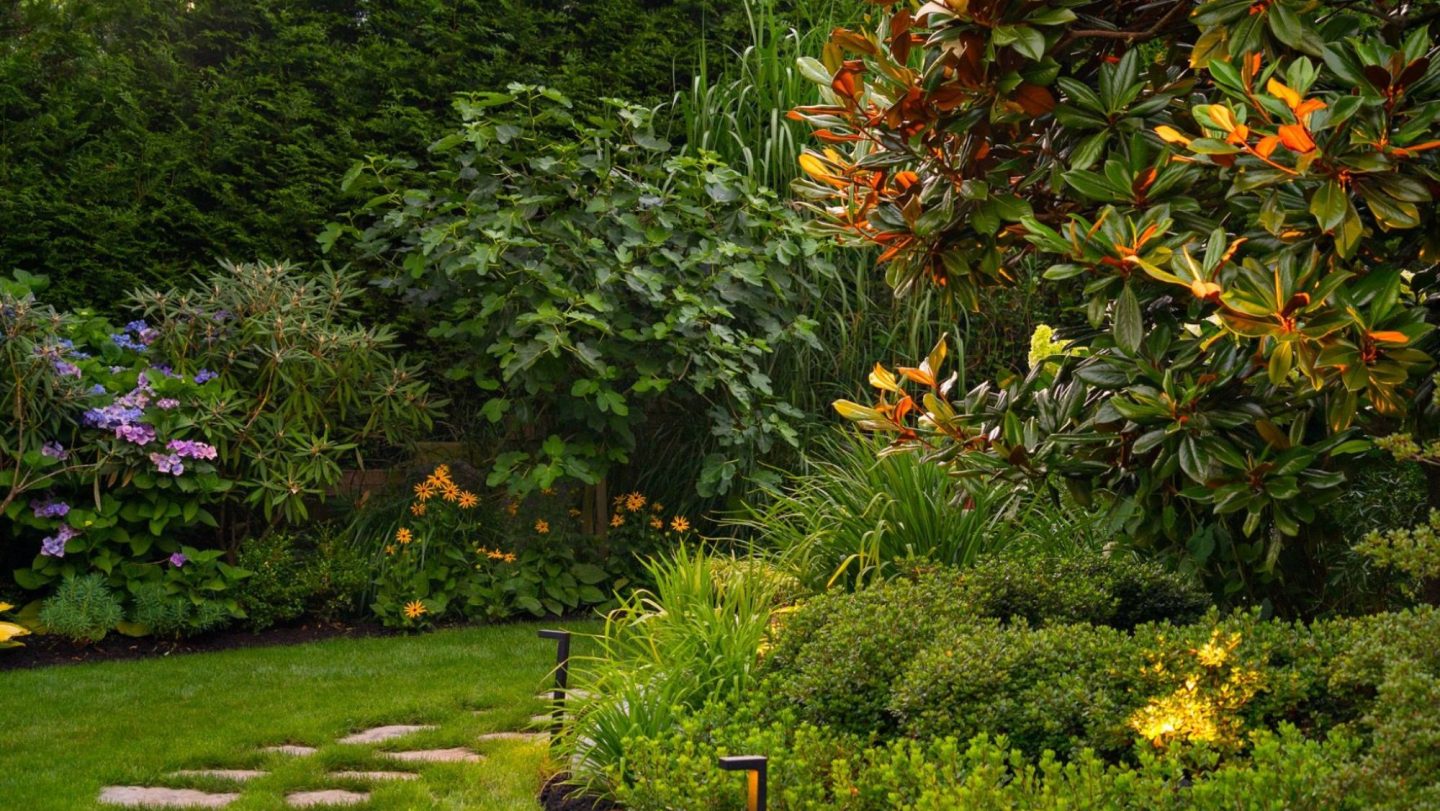
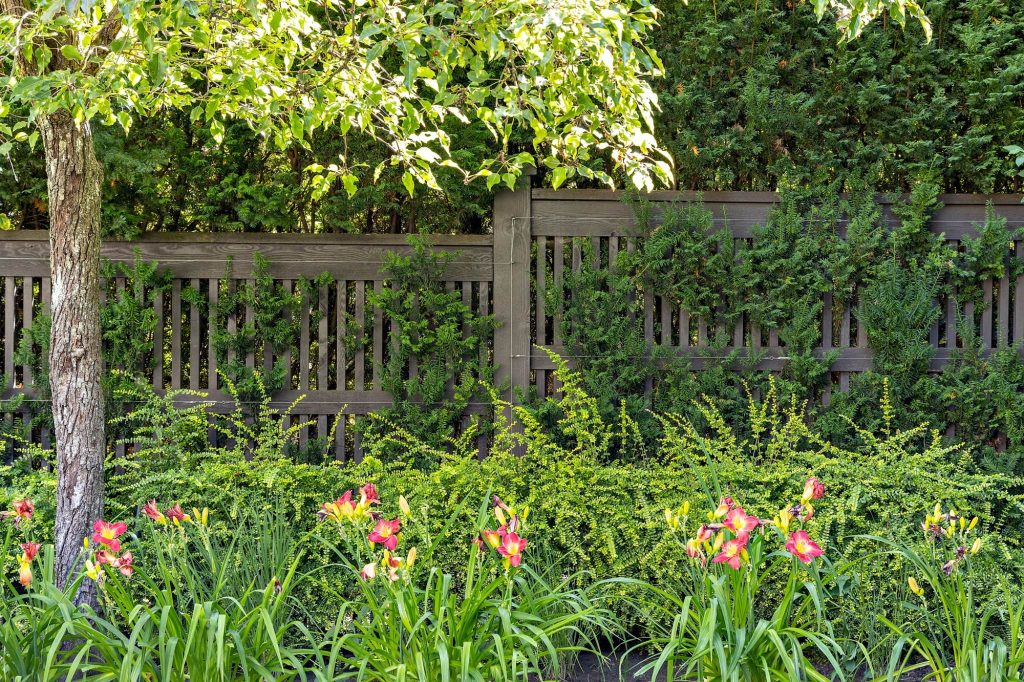
Early spring gardens in Vancouver are rarely created with a single plant type. The most successful layered planting Vancouver gardens combine trees, shrubs, bulbs, and perennials so that interest begins as early as January and builds naturally through the season.
Rather than relying on seasonal bedding plants, professional garden design focuses on structure first, with seasonal plants layered beneath. This approach creates gardens that feel refined, intentional, and beautiful year-round.
Vancouver’s coastal climate with mild winters, wet springs, and changing light conditions, makes layered planting particularly effective. This approach allows early bulbs to emerge before tree canopies fill in, followed by perennials that build seasonal density, while evergreen plants maintain structure throughout the year. Below are three planting styles that work particularly well in Vancouver landscapes, each demonstrating how layered planting can be applied in different site conditions.
1. Woodland Spring Garden
Shade to Part Shade
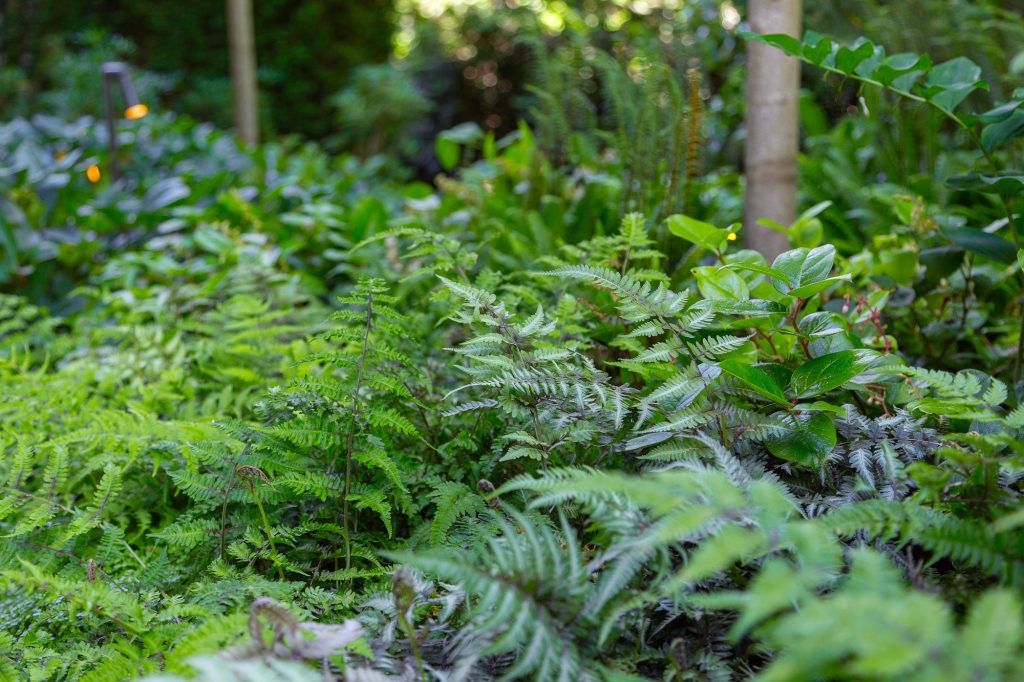
Woodland-style planting works well beneath trees and along shaded garden edges. These gardens focus on soft textures and early spring bloomers that thrive in Vancouver’s cool, moist climate.
Key Plants
- Magnolia stellata
- Hellebores
- Epimedium
- Brunnera macrophylla
- Snowdrops (Galanthus)
- Dwarf iris (Iris reticulata)
- Evergreen ferns
Why This Works for Layered Planting
Woodland planting allows early bulbs and perennials to emerge naturally beneath trees and shrubs. Early flowers appear first, followed by emerging foliage that gradually fills the garden through spring.
Even in the winter, evergreen ferns and structural shrubs maintain a composed, finished appearance, creating a natural yet intentional feel.
2. Coastal Garden Border
Sun to Part Sun
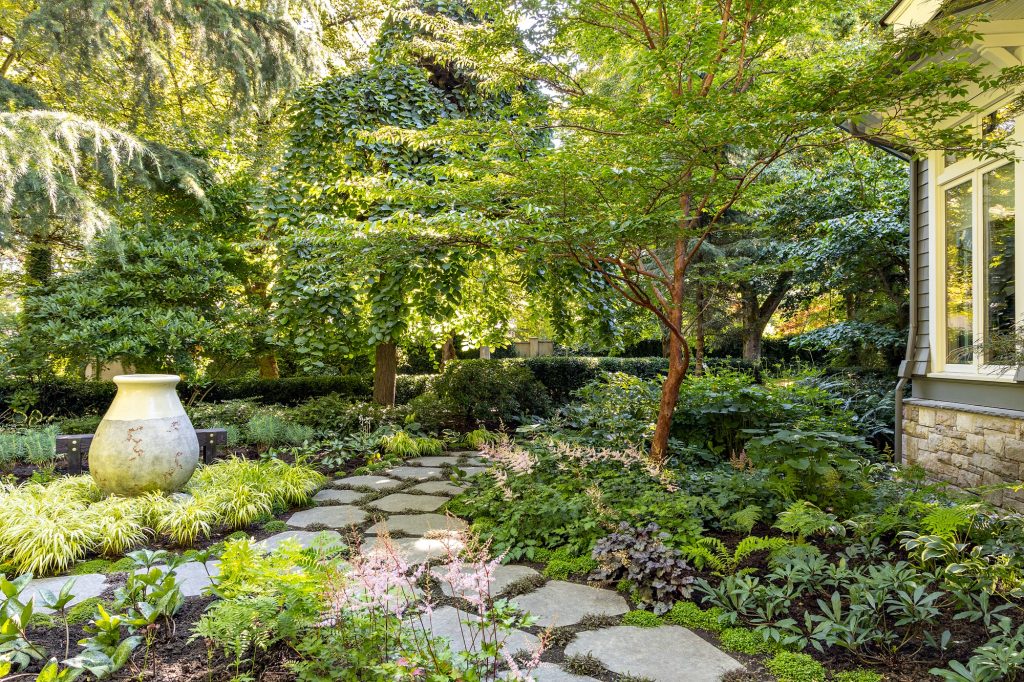
Many Vancouver gardens benefit from planting palettes inspired by coastal landscapes – clean, structured planting with durable plants that tolerate changing conditions.
Key Plants
- Daphne odora
- Pieris japonica
- Bergenia
- Euphorbia characias
- Chionodoxa
- Narcissus ‘Thalia’
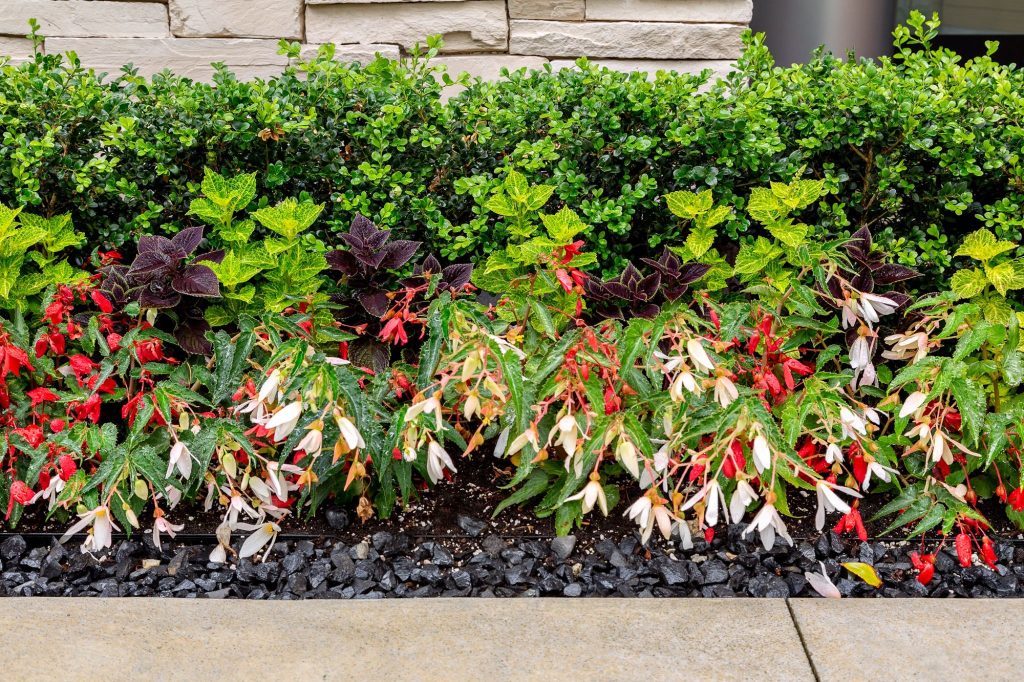
Why This Works
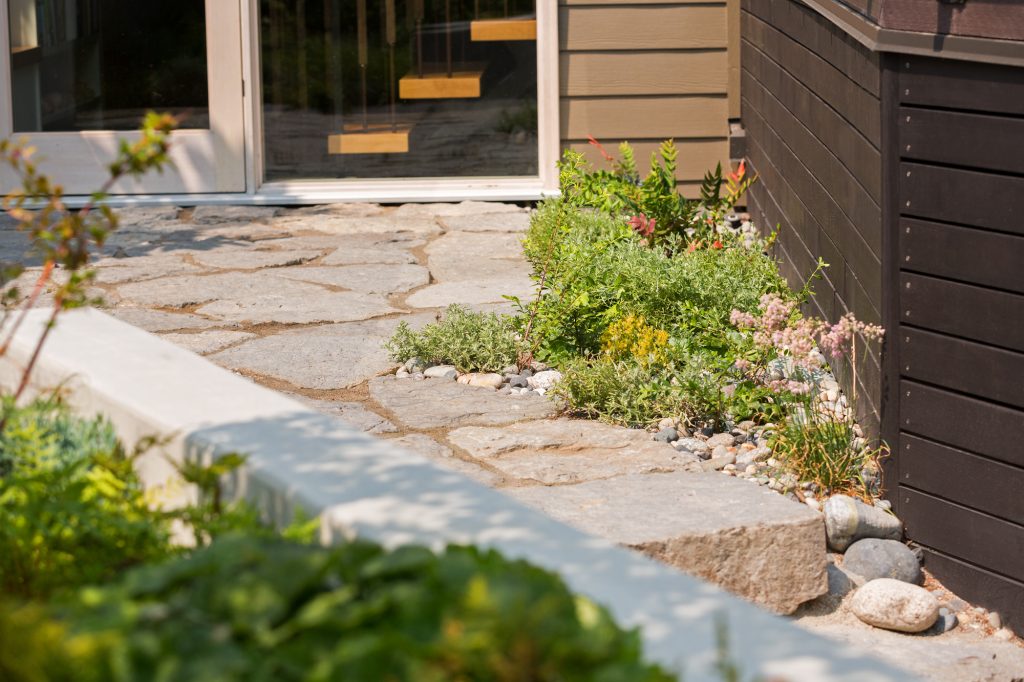
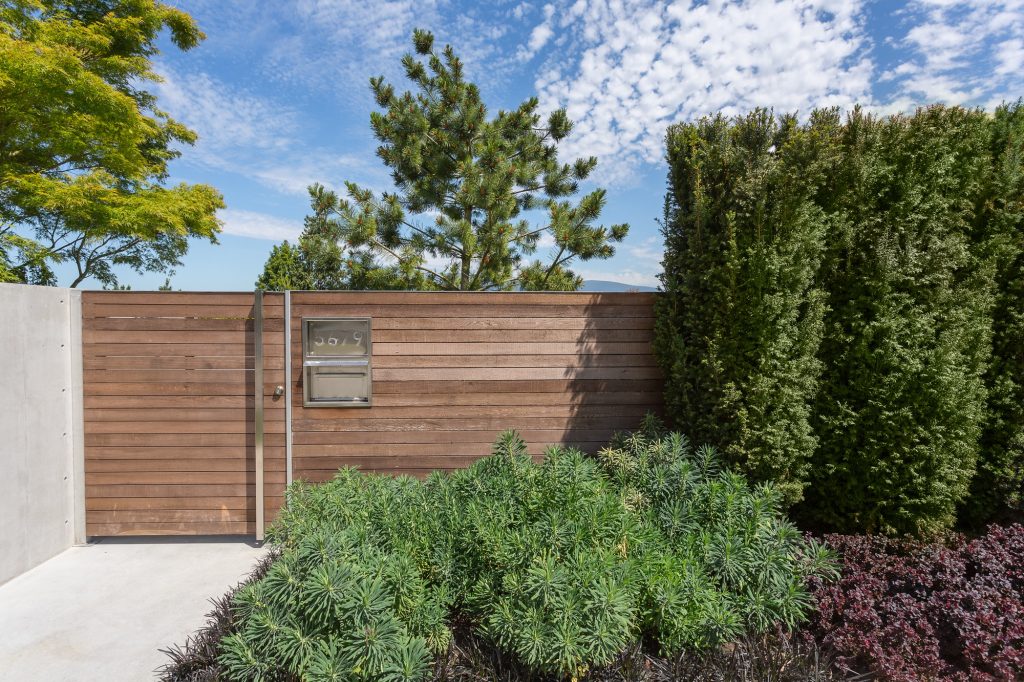
This planting style combines evergreen structure with seasonal highlights. Architectural foliage plants such as bergenia and euphorbia provide year-round presence, while bulbs bring early spring colour. The result is a garden that feels refined, structured, and easy to maintain, making it ideal for both residential and strata landscapes.
3. Structured Naturalized Garden
Layered but Controlled
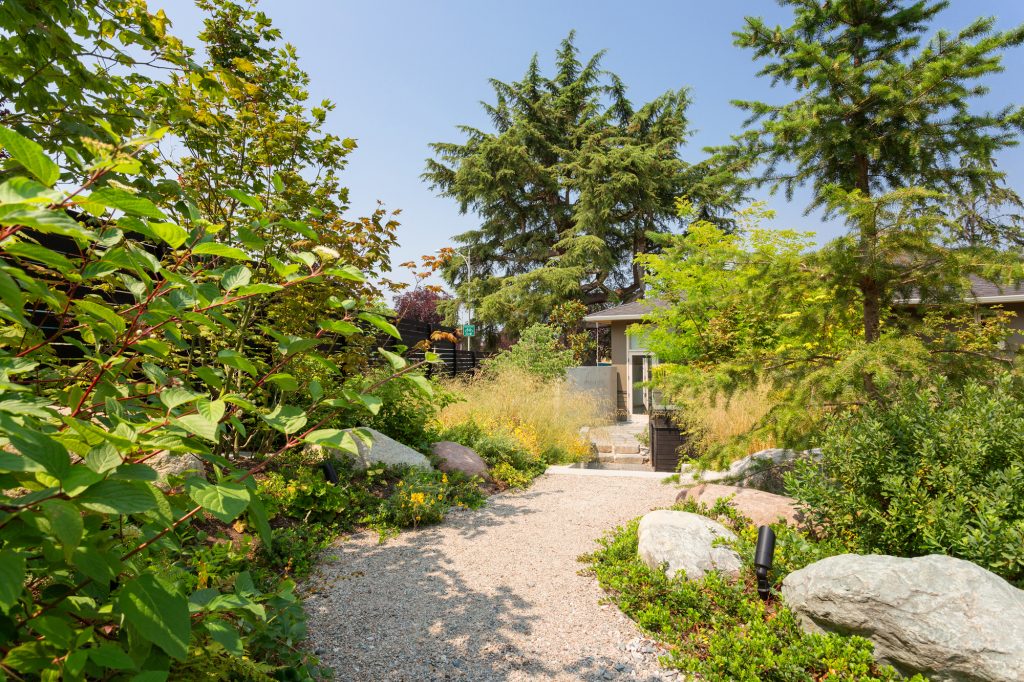
Naturalized planting has become very popular, but without careful design it can quickly become messy or unstructured. Many of our clients prefer a garden that feels natural while still maintaining clean lines and a sense of order.
The key is combining structured framework plants with naturalized seasonal layers.
Key Plants
- Ribes sanguineum (Flowering currant)
- Camellia japonica
- Dicentra spectabilis
- Pulmonaria
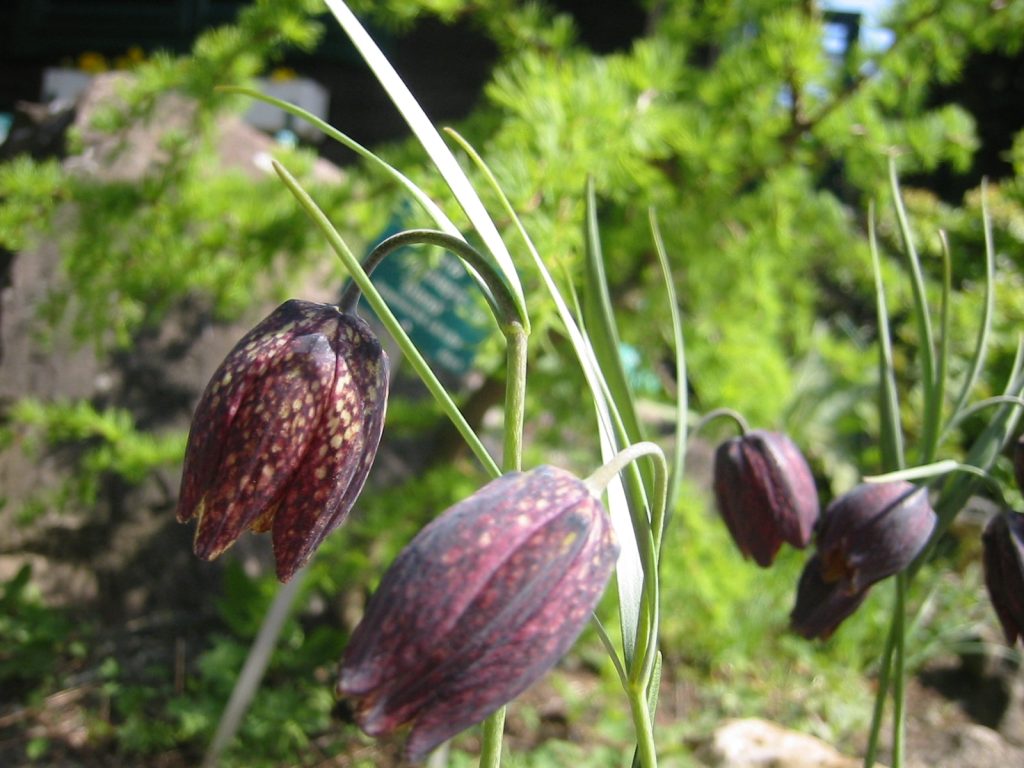
- Fritillaria meleagris
- Crocus
- Muscari
Why This Works
Shrubs and structural plants create the framework of the garden, while bulbs and perennials fill in between them. Plants are arranged in intentional drifts and groupings, rather than scattered randomly. This creates the feeling of a naturalized garden while still maintaining the clean, modern aesthetic many Vancouver homeowners prefer.
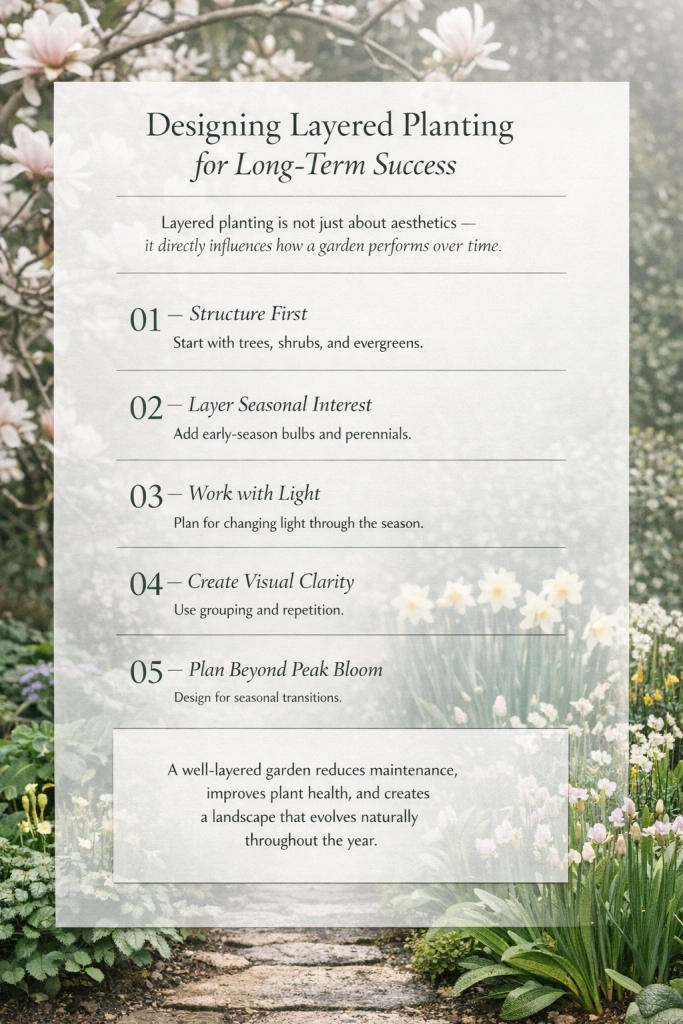
Designing Layered Planting for Long-Term Success
Layered planting is not just about aesthetics as it directly affects how a garden performs over time.
To ensure success:
- Start with structural plants (trees, shrubs, evergreens)
- Layer in early-season bulbs and perennials
- Consider light changes through spring and summer
- Use groupings and repetition for visual clarity
- Plan for seasonal transitions, not just peak bloom
A well-layered garden reduces maintenance, improves plant health, and creates a landscape that evolves naturally through the year.
Planning Beyond Spring: Building a Resilient Garden
Layered planting works best when it connects with broader garden planning strategies. Soil health, pest management, seasonal preparation, and installation quality all influence long-term performance.
For further guidance, explore:
- What Are the Best Ground Covers for Pacific Northwest Gardens?
- How Mulching Saves Time & Money in Your Garden
- The Hidden Dangers of Pre-Emergent Herbicides: What You Need to Know
- Beneficial Nematodes for Lawn & Garden Pest Control
- How to Protect Your Landscape from Vancouver’s Summer Heat
- Do You Know How to Winterize Your Garden, Trees, and Hedges?
These resources help ensure your planting decisions support a garden that performs well across every season.
Conclusion
Layered planting transforms early-spring gardens from simple seasonal displays into structured, evolving landscapes. Vancouver gardens can achieve both immediate spring interest and long-term performance by combining trees, shrubs, bulbs, and perennials with intention.
For more information on how to plan your garden and choose the best plants before the bloom season, contact us.
Frequently Asked Questions: Layered Planting in Vancouver
What is layered planting in garden design?
Layered planting combines trees, shrubs, bulbs, and perennials to create a garden that builds interest over time. Each layer plays a role in structure, seasonal colour, and long-term performance
Why is layered planting important in Vancouver gardens?
Vancouver’s mild climate allows multiple plant layers to thrive together. Layered planting ensures gardens have early-spring interest, summer fullness, and year-round structure.
What plants are best for layered spring planting?
A mix of structural plants (like camellia, pieris, or magnolia), early bulbs (such as crocus, narcissus, and muscari), and perennials (like hellebores and pulmonaria) creates a balanced layered design.
How do you keep a naturalized garden from looking messy?
Use structured framework plants and arrange bulbs and perennials in intentional groupings or drifts. Avoid scattering plants randomly to maintain a clean, composed look.
Can layered planting reduce maintenance?
Yes. A well-layered garden suppresses weeds, improves soil coverage, and creates a more stable planting environment, reducing the need for frequent intervention.
Have a project in mind?
 Contact Us