
Why Pruning in the PNW Requires a Different Approach
When is the best time to prune trees and shrubs in the Pacific Northwest? The answer depends on the plant species, its flowering cycle, and current growing conditions. While late winter and early spring work well for many plants, others need pruning after flowering or only when necessary.
Pruning is one of the most important aspects of landscape maintenance, but it’s also one of the easiest to get wrong. Advice passed down over generations often focuses on rigid schedules or one-size-fits-all techniques that don’t reflect the growing conditions of the Pacific Northwest.
Across Vancouver and the Lower Mainland, mild winters, wet springs, and long growing season, successful pruning requires a more thoughtful approach. Rather than pruning because the calendar says it’s time, the best results come from understanding the individual plant, current weather conditions, and the long-term goals for the landscape.
As Patrick, Horticultural Lead at Swick’s Landscaping, explains:
“Try not to go on a month-by-month basis. It’s far more important to respond to actual weather conditions.”
Modern pruning is about understanding how plants grow and making informed decisions that improve their structure, health, and longevity.
Start by Understanding the Plant Before Pruning
Before making a single cut, it’s important to know what you’re pruning.
Different trees and shrubs grow, flower, and respond to pruning in different ways. Some tolerate substantial reduction, while others perform best with occasional selective thinning.
Hydrangeas are a perfect example. Many homeowners automatically remove old flower heads every year without realizing that different varieties bloom on different types of wood.
Many long-standing pruning recommendations originated from agricultural systems or regions with colder continental climates and shorter growing seasons.
According to Patrick, unnecessary deadheading of Hydrangea macrophylla is one of the most common pruning mistakes he encounters.
“We regularly see energy diverted away from the leading stem and into the flower head, which compromises long-term structure.”
Understanding the species before pruning helps preserve future flowering and maintain the natural form of the plant.
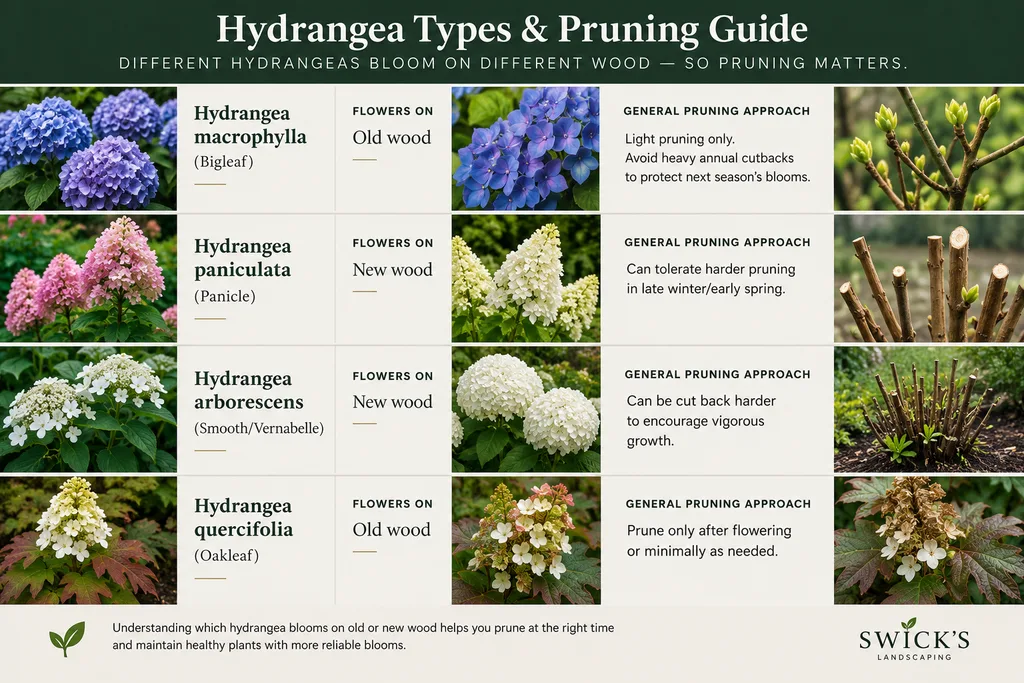
The distinction between old and new wood matters because pruning at the wrong time can remove flower buds before they have a chance to open.
For additional species-specific guidance, see Oregon State University Extension’s hydrangea care recommendations.
When Is the Best Time to Prune Trees and Shrubs in Vancouver?
There isn’t one ideal pruning season for every plant in the Pacific Northwest.
Late winter and early spring are often suitable for dormant pruning, particularly for many deciduous trees and shrubs that flower on new growth. However, spring-flowering shrubs generally need a different approach because their buds developed during the previous growing season.
In Vancouver’s coastal climate, prolonged wet weather also matters. For plants susceptible to particular fungal or bacterial diseases, pruning during wet conditions may increase the risk of spreading pathogens.
Before scheduling pruning, consider:
- Plant species: Different plants need different pruning techniques.
- Flowering habits: Identify whether blooms develop on old or new wood.
- Weather conditions: Avoid unsuitable conditions, particularly when disease risk is a concern.
- Plant health: Assess damage, stress, and existing growth before removing branches.
- Pruning objectives: Decide whether the goal is shaping, rejuvenation, structural improvement, or disease management.
The Government of British Columbia’s Home and Garden Pest Management Guide also emphasizes matching pruning techniques and timing to plant growth and flowering habits.
The takeaway is simple: timing should support the plant, not just the maintenance calendar.
Learn to Read the Plant: Signs That Pruning Is Needed
Patrick often says that “the form of the specimen tells a story.”
Experienced horticulturists can often identify years of poor pruning simply by looking at a plant’s structure.
Common signs that a tree or shrub may benefit from pruning include:
- Dense outer growth that prevents light from reaching the interior
- Crossing or rubbing branches
- Dead, damaged, or diseased wood
- Excessive suckering or unwanted water sprouts
- Reduced flowering, where pruning history may be a contributing factor
- An unbalanced canopy or distorted natural shape
Not every irregular branch needs to be removed. A healthy plant with balanced growth and strong structure may need very little intervention.
This is particularly important in mature Vancouver gardens, where established trees and specimen shrubs contribute much of the landscape’s character.
Pruning should solve a problem, not create one.
When Is Hard Pruning Appropriate?
Many homeowners hesitate to remove large sections of a plant because they worry about causing permanent damage.
In some situations, however, rejuvenation pruning can help restore an older shrub that has become woody, overgrown, or sparse.
Older shrubs that have become woody, leggy, or overgrown can often be restored through substantial reduction pruning performed at the correct time.
Species that frequently respond well include:
- Mature rhododendrons
- Spirea
- Potentilla
- Some deciduous hedging species
Patrick offers a useful reminder:
“Don’t be afraid to go hard. Plants have a great ability to bounce back.”
However, that doesn’t apply to every plant.
Japanese maples, many ornamental conifers, and mature specimen trees generally require more selective work. Removing too much live growth may compromise their structure or natural appearance.
The objective isn’t to prune as much as possible. It’s to choose the right level of pruning for the species and its condition.
Common Pruning Mistakes We See in Pacific Northwest Gardens
After maintaining landscapes across the Lower Mainland for years, our team regularly encounters the same avoidable issues:
- Deadheading Hydrangea macrophylla when it isn’t necessary
- Shearing shrubs that would benefit from selective thinning
- Topping trees instead of performing structural pruning
- Pruning because of the season rather than the plant’s condition
- Removing too much foliage in a single year
These practices often create additional maintenance costs and permanently alter the natural form of the plant.
Think Beyond This Season: The Long-Term Value of Proper Pruning
Every pruning decision affects the future growth of the plant.
Repeated topping, poorly placed cuts, and unnecessary reductions may gradually alter a plant’s natural form. Correcting those problems can require additional labour, specialist care, or eventual replacement.
As Patrick explains:
“Inheriting poor pruning mistakes over years can lead to extensive labour costs and potentially the demise of the plant as it may not be able to return to its true form and shape.”
For residential estates, strata properties, and commercial landscapes, that matters.
Mature trees and shrubs take years to establish. Replacing them can be expensive and may significantly change the appearance of a property.
A consistent, species-appropriate maintenance approach can help:
- Preserve mature trees and established shrubs
- Reduce unnecessary corrective pruning
- Maintain balanced growth and natural form
- Limit avoidable replacement expenses
- Support the landscape’s long-term appearance and health
Our strata and commercial landscape maintenance services include ongoing tree, shrub, and hedge care as part of a broader property maintenance approach.
Professional Pruning Standards Matter
Good pruning involves more than cutting branches to achieve a particular shape.
Professional horticultural practices consider plant biology, growth patterns, branch structure, disease prevention, and the long-term health of the landscape.
British Columbia’s provincial plant-health guidance supports selective pruning, proper tool care, and species-specific timing.
For trees, the International Society of Arboriculture’s pruning guidance explains why techniques such as tree topping can cause lasting structural damage.
These principles are especially relevant when maintaining mature trees, large ornamental specimens, and established landscapes that require more than routine trimming.
At Swick’s Landscaping, our horticultural and maintenance teams consider the needs of individual plants alongside the overall condition of the property. Larger tree work and structural safety concerns should be assessed by a qualified arborist.
Key Takeaways: Better Pruning Starts with Understanding the Plant
Pruning in the Pacific Northwest doesn’t need to follow a rigid calendar or a single set of rules.
The most important step is understanding the plant—how it grows, when it flowers, and what it needs to remain healthy.
Some shrubs benefit from rejuvenation pruning. Others need only occasional selective cuts. And sometimes, leaving a healthy plant alone is the best decision.
For Vancouver homeowners and property managers, thoughtful pruning is part of protecting the landscape over time. It preserves mature planting, supports long-term performance, and helps avoid unnecessary corrective work.
Planning ongoing landscape maintenance?
Swick’s Landscaping provides professional landscape maintenance for residential, strata, and commercial properties throughout Metro Vancouver. Contact our team to discuss your property’s maintenance needs.
Frequently Asked Questions About Pruning in the Pacific Northwest
When is the best time to prune trees and shrubs in Vancouver?
Late winter and early spring are suitable for many deciduous trees and summer-flowering shrubs. Spring-flowering shrubs often benefit from pruning after flowering. The best timing depends on species, growth habits, plant health, and weather conditions.
Do all hydrangeas need to be deadheaded every year?
No. Deadheading is often optional, and some hydrangeas benefit from retaining their old flower heads through winter. For Hydrangea macrophylla, avoid cutting into stems that contain developing flower buds. Pruning requirements also vary between traditional and reblooming cultivars.
How can I tell if a shrub needs pruning?
Look for dead or damaged branches, crossing stems, overly dense growth, or significant changes in natural form. A healthy, well-structured shrub may need very little pruning.
Is hard pruning harmful to shrubs?
Not always. Some established shrubs tolerate rejuvenation pruning and can recover well. However, severe pruning may damage unsuitable species or temporarily eliminate flowering. Identify the plant before making substantial cuts.
What is the difference between pruning and trimming?
Pruning generally involves selective cuts to improve plant structure, growth, and health. Trimming or shearing focuses more on maintaining a defined shape, particularly for formal hedges. Both have a place in professional landscape maintenance.
Why is proper pruning important for strata properties?
Consistent, species-appropriate pruning helps maintain healthy planting, improve clearance and visibility, and reduce avoidable corrective work. It also supports the long-term appearance and maintenance planning of shared landscapes.
Read more:
How Mulching Saves Time & Money in Your Garden
Resilient Gardens: Designing Landscapes for Long-Term Health
Do You Know How to Winterize Your Garden, Trees, and Hedges?
The Real Cost of Cutting Corners in Landscape Installation
Have a project in mind?


 Contact Us