
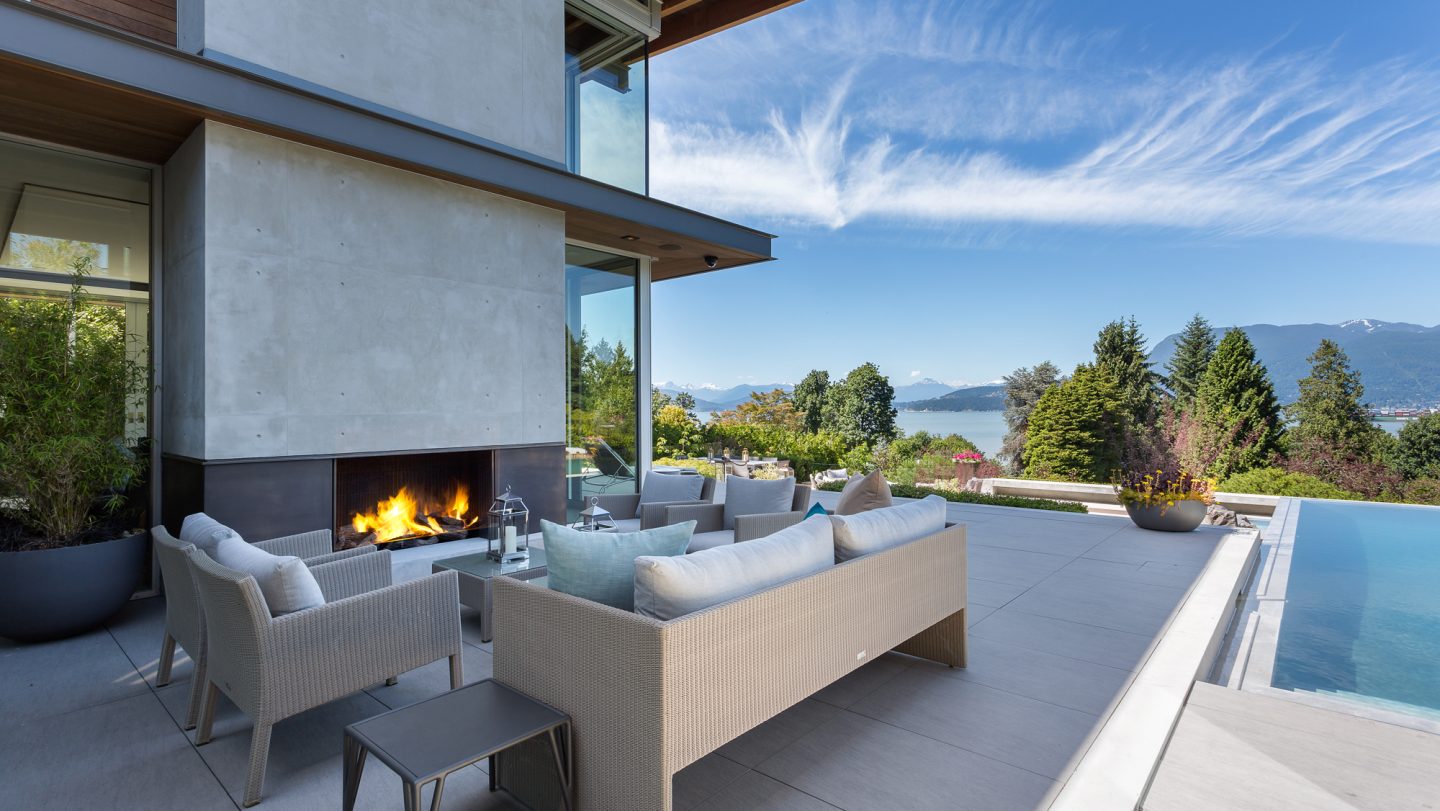
Porcelain pavers have become a popular choice for patios, rooftop terraces, walkways, outdoor kitchens, and other outdoor living spaces and for good reason.
They offer the clean look of natural stone or concrete with excellent durability and relatively low maintenance. They also work particularly well with contemporary landscape design, where consistent finishes, large-format pavers, and clean transitions between indoor and outdoor spaces are often part of the overall design.
But choosing porcelain pavers isn’t only about finding a colour or finish you like.
The paver itself, installation system, drainage, site conditions, and intended use all need to work together. In Vancouver, where landscapes have to perform through months of rain, these details are especially important.
Why Use Porcelain Pavers Outdoors?
1. Durable for Outdoor Living
During production, manufacturers apply heat to outdoor porcelain pavers to reach very high temperatures, forming a dense and durable material.
Quality exterior-rated porcelain is resistant to staining, scratching, moisture, and changing weather conditions. Unlike some natural materials, it also doesn’t require regular sealing to maintain its appearance.
That makes porcelain particularly useful in high-use areas such as:
- Patios and dining areas
- Outdoor kitchens
- Rooftop and penthouse terraces
- Pool surrounds
- Garden walkways
- Courtyards and entertaining spaces
For homeowners looking for a refined surface without a complicated maintenance routine, porcelain can be a very practical option.
2. Low Maintenance
One of the biggest advantages of porcelain pavers is how easy they are to maintain.
Because porcelain has very low water absorption, spills and dirt generally remain closer to the surface rather than soaking deeply into the material. Clean the surface routinely with water and a mild cleaner, and perform deeper cleaning when needed.
This can be particularly helpful around outdoor kitchens and dining areas where food, grease, drinks, and everyday outdoor use are part of the space.
That doesn’t mean a porcelain patio is completely maintenance-free. Joints, drainage systems, surrounding planting, and pedestal systems still require periodic inspection and care. But the porcelain surface itself is generally straightforward to look after.
3. A Wide Range of Design Options
Porcelain has come a long way aesthetically.
Today’s outdoor porcelain pavers are available in finishes that resemble natural stone, concrete, wood, and other materials. Large-format slabs can create a clean, contemporary look, while stone-inspired finishes can sit more naturally within a planted garden.
This gives landscape designers considerable flexibility.
We often look beyond the individual paver and consider how its colour, scale, and texture will work with the rest of the property — the architecture, retaining walls, planting, outdoor furniture, woodwork, and other hardscape materials.
The goal is for the paving to feel like part of the landscape, rather than something selected separately from it.
4. Good Performance in Wet Conditions
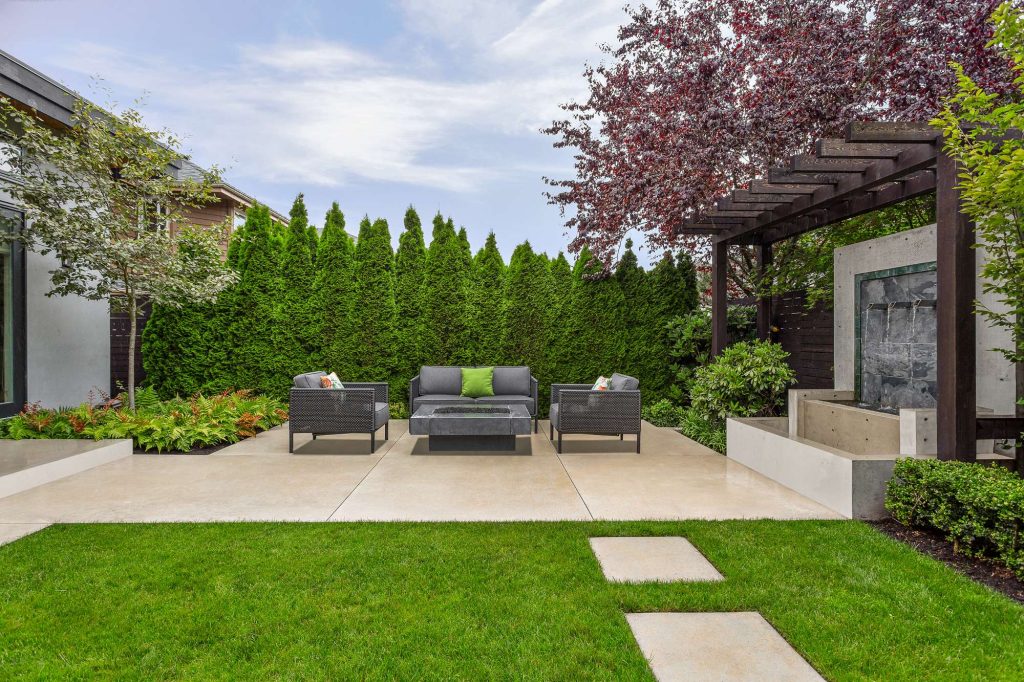
For Vancouver landscapes, surface texture matters.
Choose exterior-rated porcelain with a slip-resistant finish for exposed areas to ensure outdoor paving performs through wet fall and winter conditions.
This becomes even more important around pools, stairs, walkways, and other areas where water is likely to be present.
Tile manufacturers do not design every porcelain tile for exterior paving. Interior porcelain tile and exterior porcelain pavers can look similar, but they aren’t necessarily interchangeable.
Always verify the product’s rating for its intended outdoor application.
5. Consistent color and Appearance
People value natural stone for its variation, but a project sometimes requires greater consistency.
Porcelain can provide a more controlled appearance from one paver to another, making it particularly well suited to modern landscapes and architectural homes.
Quality porcelain is also highly resistant to UV-related fading, helping the finished space maintain its appearance over time.
What Should You Consider Before Choosing Porcelain Pavers?
The material has plenty of advantages, but successful porcelain paving depends heavily on selecting the right product and installation method.
Paver Thickness and Size
Outdoor porcelain pavers are available in different sizes and thicknesses depending on their intended use.
Large-format pavers can create beautiful, uninterrupted surfaces with fewer joints, but they also require careful handling and accurate installation.
The larger the format, the more important proper base preparation, support, levelling, and drainage become.
A product that works well on a rooftop pedestal system may not be the right choice for an at-grade garden patio; you should consider product specifications alongside site conditions.
Colour and Style
A sample in a showroom can look very different once it’s installed across a large outdoor area.
Before making a final selection, consider how the material looks in natural daylight and alongside the home’s existing finishes.
Lighter porcelain can help create a bright, open feeling, while darker tones can provide contrast and definition. Stone-look porcelain can work well in softer garden settings, while concrete-inspired finishes often complement contemporary architecture.
We also recommend thinking about the long-term design rather than selecting a material based only on current trends.
Texture and Slip Resistance
Exterior porcelain should provide enough texture for its intended location.
A very smooth finish may look attractive but may not be appropriate for an exposed Vancouver patio or pool surround.
When comparing products, look specifically at their exterior and slip-resistance ratings rather than choosing based on appearance alone.
Choosing the Right Installation Method
This is one of the most important parts of a porcelain paver project.
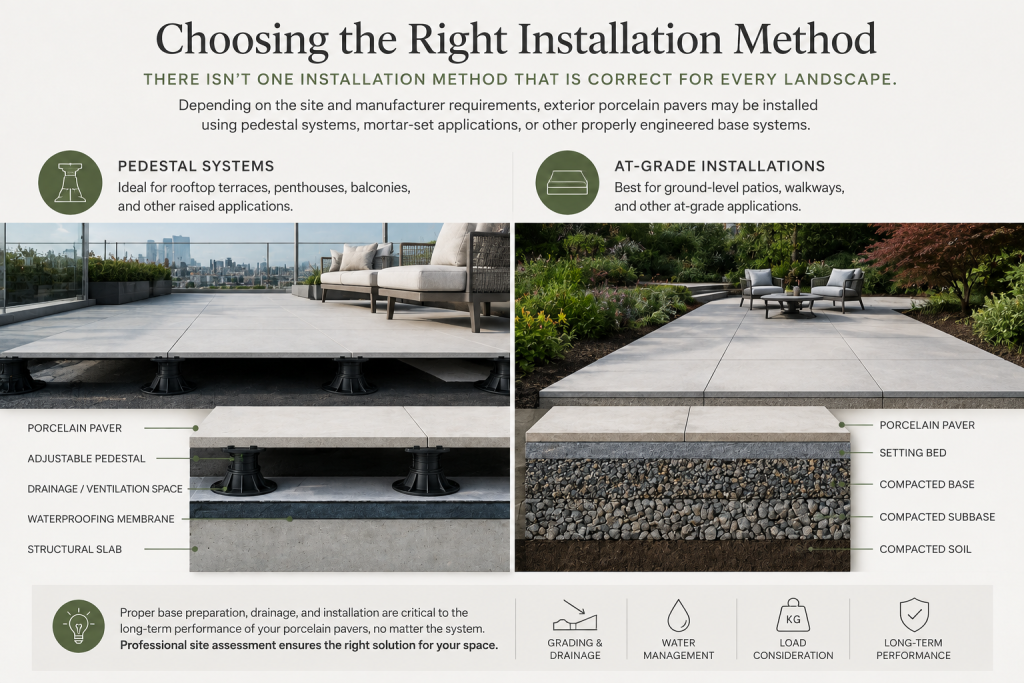
There isn’t one installation method that is correct for every landscape.
Depending on the site and manufacturer requirements, exterior porcelain pavers may be installed using pedestal systems, mortar-set applications, or other properly engineered base systems.
Pedestal Systems
Raised pedestal systems are particularly useful for rooftop terraces, penthouses, balconies, and some raised patio applications.
The pavers sit on adjustable supports rather than directly on the surface below. This creates space underneath the finished paving for drainage and, where required, access to utilities or waterproofing systems.
For rooftop landscapes, this can be a major advantage.
Water can move beneath the pavers toward the existing drainage system while the visible surface remains relatively level. Individual pavers can also be lifted when access below is required.
At-Grade Installations
Ground-level patios require a different approach.
Base preparation, soil conditions, drainage, edge restraint, product specifications, and anticipated loads all need to be considered before determining the appropriate installation system.
This is where professional site assessment becomes important. The finished porcelain may only be a few centimeters thick, but the performance of the patio depends heavily on what is happening underneath it.
Drainage Matters – Especially in Vancouver
A beautiful surface won’t perform well if water has nowhere to go.
Drainage should be considered from the beginning of the landscape construction process, not after the pavers have already been selected.
The installation may need to account for:
- Existing site grades
- Surface runoff
- Building drainage
- Roof drains
- Waterproofing membranes
- Soil conditions
- Adjacent planting areas
- Thresholds and doorways
On rooftop and penthouse projects, drainage becomes even more important because the landscape is being constructed over an existing building envelope.
The finished surface needs to look clean while still allowing the systems underneath it to do their job.
Why Professional Installation Matters
Porcelain is a high-quality material, but the finished project is only as good as the installation beneath it.
Incorrect preparation can lead to movement, uneven surfaces, drainage problems, damaged edges, or an installation that simply doesn’t perform as intended.
A professional landscape contractor should consider the entire system: excavation or structural surface, drainage, base preparation, grades, support, cuts, joints, transitions, and surrounding landscape.
That planning is especially important when porcelain connects with other elements such as outdoor kitchens, stairs, retaining walls, pergolas, pools, or planting beds.
Porcelain Pavers for Rooftop and Penthouse Landscapes
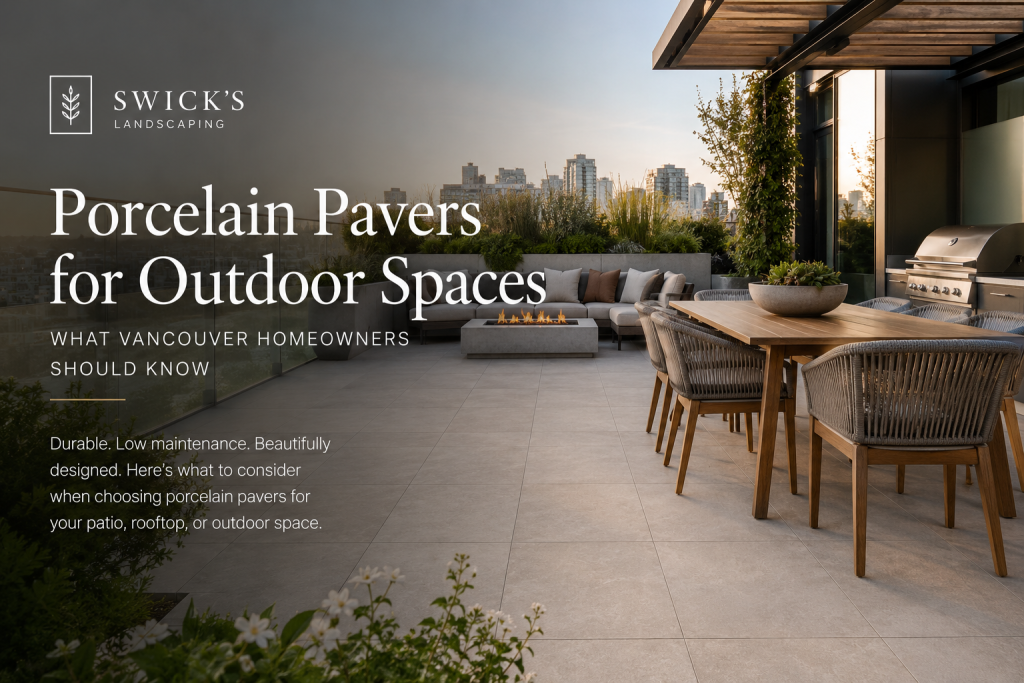
Porcelain is particularly well suited to rooftop outdoor spaces.
Large-format pavers can create a clean architectural surface while pedestal installation systems allow drainage and building infrastructure to remain accessible below.
We’ve used this approach when creating rooftop spaces that combine paving with outdoor kitchens, dining areas, planters, lighting, pergolas, fire features, and other elements.
These projects demonstrate an important point: rooftop landscaping isn’t simply a patio built higher off the ground.
Access, material weight, wind exposure, waterproofing, drainage, strata requirements, and construction sequencing all need to be considered before installation begins.
Are Porcelain Pavers Right for Your Landscape?
Porcelain pavers can be an excellent choice if you’re looking for a durable, low-maintenance surface with a clean and refined appearance.
But there is no single paving material that works for every property.
Natural stone may be better suited to some landscapes. Concrete or concrete pavers may make more sense for others. Porcelain is most successful when its appearance and technical characteristics fit the site, architecture, intended use, and overall landscape design.
The best decision comes from looking at the entire outdoor space rather than choosing a material in isolation.
Planning an Outdoor Living Space in Vancouver?
At Swick’s Landscaping, we design and build outdoor spaces throughout Metro Vancouver, from ground-level patios and gardens to complex rooftop and penthouse landscapes.
Our approach considers both what you see above the surface and the construction details underneath it: grading, drainage, base preparation, access, installation, and how each material connects with the rest of the landscape.
If you’re considering porcelain pavers as part of a new patio, rooftop terrace, outdoor kitchen, or larger landscape construction project, contact our team to discuss your space.
Frequently Asked Questions About Porcelain Pavers
Are porcelain pavers good for Vancouver weather?
Yes. Quality exterior-rated porcelain pavers have very low water absorption and can perform well in wet and changing weather conditions. Proper drainage and installation remain essential.
Are porcelain pavers slippery when wet?
It depends on the product and finish. Exterior porcelain pavers are available with textured, slip-resistant surfaces. Always select a product rated for the intended outdoor application, particularly around pools, stairs, and exposed walkways.
Do outdoor porcelain pavers need to be sealed?
Porcelain generally doesn’t require sealing in the same way many natural stones do because it has very low porosity. Always follow the specific manufacturer’s care recommendations.
Can porcelain pavers be installed on pedestals?
Yes. Pedestal systems are commonly used for rooftop terraces, balconies, penthouses, and other raised applications. They allow water to drain beneath the finished paving and can provide access to underlying systems.
Can porcelain pavers be used for a ground-level patio?
Yes, provided the paver and installation system are suitable for the application. Proper base preparation, drainage, grading, and edge support are critical to long-term performance.
How long do outdoor porcelain pavers last?
With a suitable product and professional installation, porcelain pavers can provide a long-lasting outdoor surface. The longevity of the overall patio also depends on the base, drainage, support system, site conditions, and ongoing maintenance.
Have a project in mind?
 Contact Us