
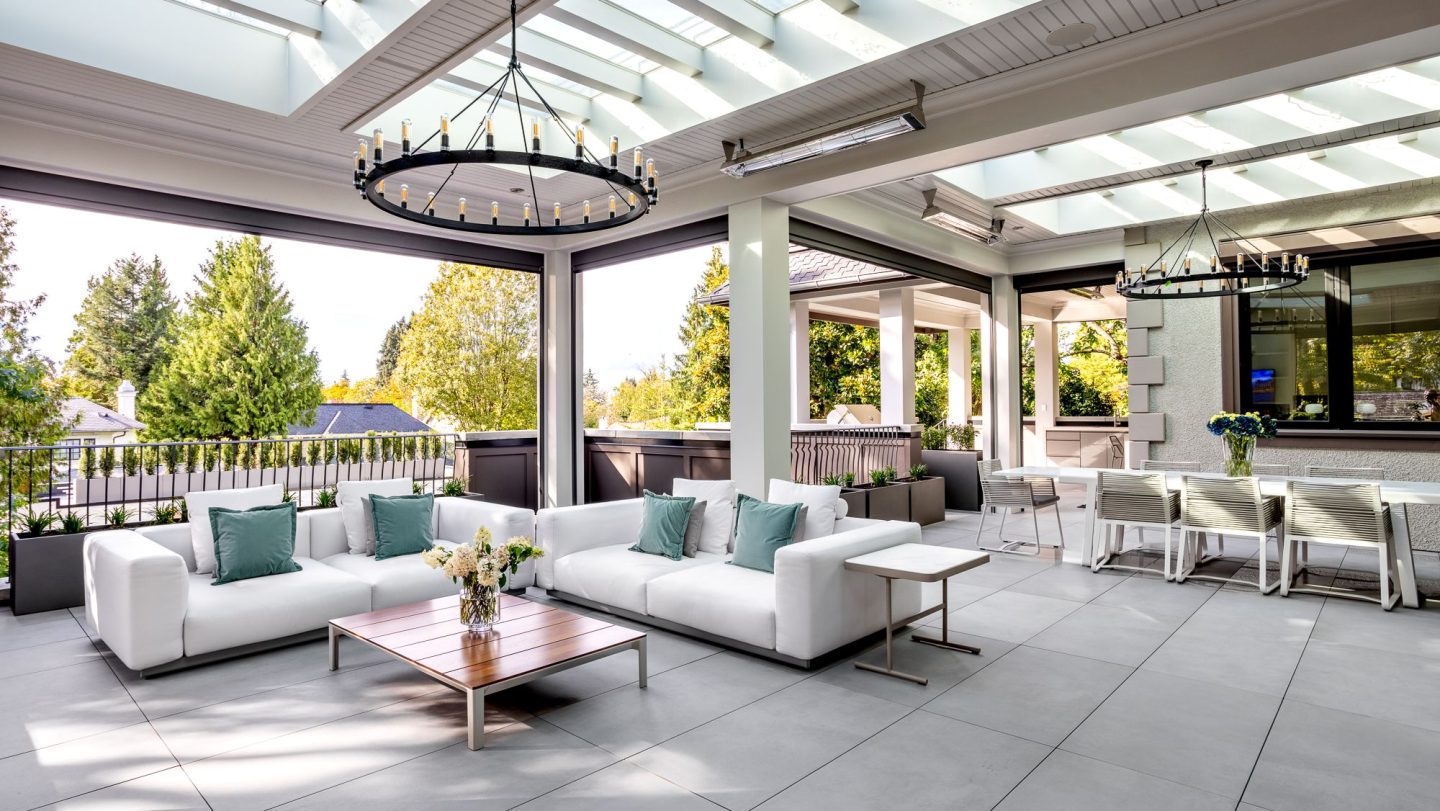
Landscaping on Penthouse and rooftop patios offer a rare opportunity to extend luxury living outdoors – often with expansive views, privacy, and architectural prominence that ground-level spaces can’t achieve.
In Metro Vancouver and the Lower Mainland, these spaces are increasingly central to how high-end residences are experienced.
Building a successful rooftop landscape, however, is far more complex than a typical garden installation. Structural load limits, wind exposure, waterproofing assemblies, drainage, access constraints, and long-term plant performance all require careful coordination and technical execution.
We specialize in building and delivering penthouse and rooftop patios, typically working from architect or landscape designer drawings, and supporting project teams with constructability input, detailing, and sequencing. The result is outdoor spaces that are not only visually refined, but durable, functional, and built to perform over time in demanding rooftop conditions.
Why Penthouse Patios Require Specialized Construction?
Penthouse patios function very differently from ground-level landscapes. Rooftops impose strict load limits, limited soil depths, and increased exposure to sun and wind. James, our Lead Construction Supervisor, often emphasizes that without advanced planning, these conditions become even more challenging. Insufficient planning can affect plant health, material performance, and even the construction itself.
Successful penthouse landscape patios require early coordination between designers, builders, engineers, strata councils, and property managers. This collaborative approach ensures that every decision, from paving systems to planter sizes, aligns with structural requirements while still providing a sophisticated outdoor living experience.
This level of complexity is why experience in rooftop construction and landscape delivery matters.
1. Structural Challenges of Building Penthouse Patios
According to James, “Weight management is one of the most important considerations when building landscape patios,” he notes. Rooftop structures have defined load limits, and exceeding them can create serious structural risks. Every element such as soil, planters, paving materials, water features, and furnishings adds to the overall load and must be carefully accounted for during design and construction.
In practice, we work closely with engineers and property managers early in the process to confirm allowable loads. Landscape patios are then built using systems and materials selected specifically for rooftop conditions, including:
- Lightweight soil blends
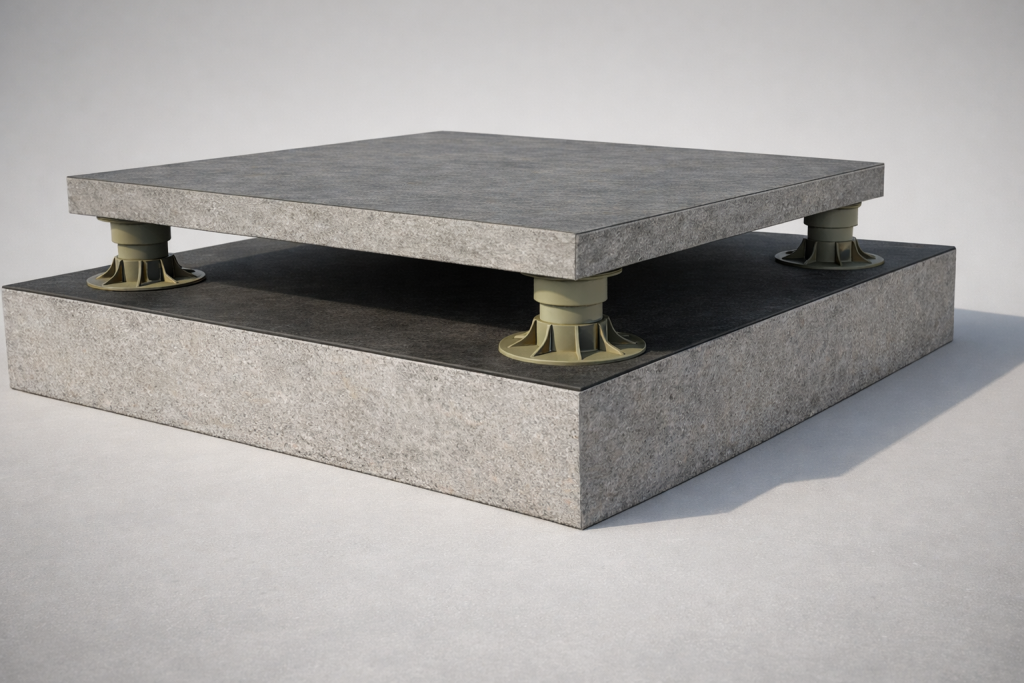
- Pedestal paver and decking systems
- Aluminum or ceramics planters
This approach allows us to introduce lush greenery, trees, and functional zones without overloading the structure. These strategies allow us to introduce planting, hardscape, and functional zones without overloading the structure while maintaining design intent and usability.
2. Strata Rules, Access, and Construction Logistics for Penthouse/Rooftop Landscape Patios
One of the most underestimated aspects of rooftop and penthouse construction is meeting building management requirements and on-site logistics. These constraints directly impact the construction sequence, material selection, schedule, and overall cost.
As James and Thomas, Construction manager, often emphasize to the team, successful rooftop projects depend on respecting the building and the people living in it. That means ensuring strata and residents are well informed about upcoming work, particularly when noisy activities or crane lifts are scheduled, and carefully managing how materials move through the site.
Strata bylaws and approval processes typically define as:
- Permitted working hours and noise restrictions
- Advance notification requirements to residents when noisy work or crane lifts are scheduled
- Protection standards for elevators, hallways, and other common areas
- Strict limitations on staging space and on-site material storage
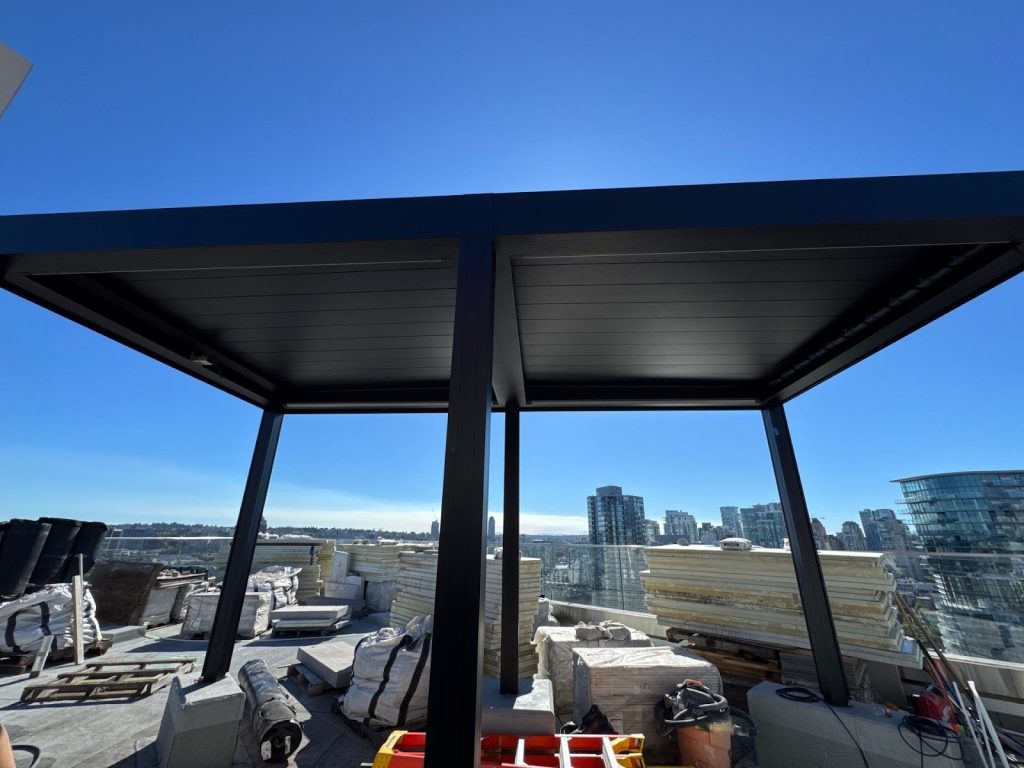
From a construction standpoint, access planning is just as critical as the build itself. James and Thomas consistently stress the importance of not overloading elevators or rooftop areas with materials. Instead, deliveries are planned in stages, materials are only transported up when necessary, and installation is carried out promptly.
Most penthouse landscape patios require a carefully coordinated combination of:
- Elevator transport for smaller, hand-carried materials
- Crane lifts for planters, pavers, soil, and large built elements
- Precisely scheduled crane days, including street permits and coordinated lift windows
Due to limited rooftop space, adherence to procedures and clear communication are essential. By keeping walkways clear, minimizing on-site storage, and maintaining transparency with building management and residents, the penthouse/rooftop patios can be built efficiently while protecting shared property and maintaining positive relationships within the building.
3. Drainage and Waterproofing Solutions for Penthouse Patios
Water management is extremely important for any rooftop or penthouse patio. Poor drainage can lead to waterlogging, damage to waterproofing membranes, and costly repairs.
Our role focuses on ensuring landscape patios are built in alignment with approved assemblies by:
- Respecting slopes and drainage pathways
- Integrating pedestal systems that allow water to flow beneath hardscape surfaces
- Using root barriers and protective layers where required
- Ensure that plant pots and furniture do not interfere with the performance of the waterproofing membrane.
This coordination protects the building envelope while creating healthy growing environments for plants above.
4. Sun, Wind, and Exposure: Building Landscape Patios That Perform
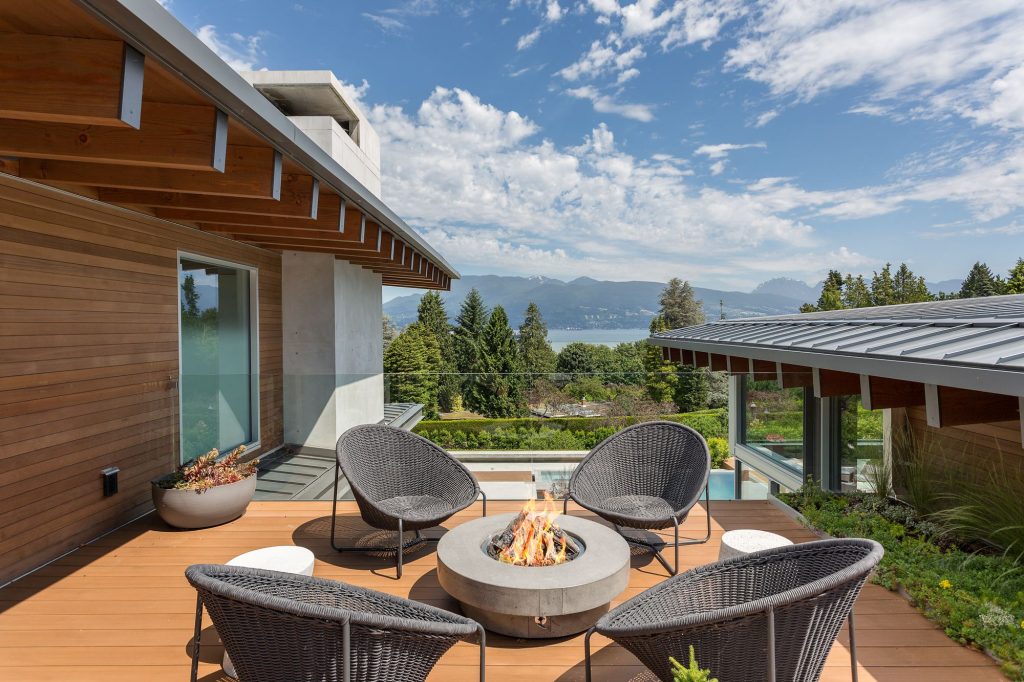
Penthouse and rooftop landscape patios are typically exposed to stronger wind and more direct sun than ground-level spaces. These conditions place increased stress on plants, materials, and furnishings, and they directly influence how a landscape patio must be built to perform over time.
From a construction standpoint, exposure is addressed through practical, performance-driven measures implemented during installation. These include:
- Wind mitigation elements such as screens, trellises, and privacy panels are securely anchored and adapted to terrace conditions.
- The arrangement and placement of planters aim to disperse airflow and reduce wind turbulence on the patio.
- Material and plant selection focuses on heat resistance, wind resistance, and long-term durability.
- Shade solutions, including pergolas, awnings, and umbrellas, are installed to manage heat load and improve usability.
These strategies are not decorative additions, they are essential construction decisions that determine whether a rooftop landscape patio will maintain its comfort, functionality, and beauty over time.
By addressing sun and wind exposure through the patio’s construction and assembly, the rooftop landscape patio will be better able to withstand harsh conditions and deliver consistent performance throughout the seasons.
5. Plant Selection Strategies for High-Performance Penthouse Patios
Plant selection is one of the most critical and most misunderstood aspects of building successful penthouse and rooftop landscape patios. While aesthetics matter, long-term performance in exposed conditions matters far more.
As Patrick, our horticultural lead, often reminds to the team:
“When you are choosing a plant for a rooftop patio, it’s important to acknowledge how it actually performs in exposed climates.”
Conditions on a rooftop terrace are often inconsistent, even within the same space. One planter might be completely exposed to direct sunlight and strong winds, while another just a few meters away is sheltered or shaded. Because of this difference, identical planters don’t always perform in the same way.
“You can’t always put the same plants in every corner of a rooftop and expect the same results. One will often outperform the others” said Patrick.
This becomes especially important when symmetry is part of the design intent. In these cases, it’s necessary to choose plants that can adapt to all existing conditions on the patio, not just the most favourable ones. Otherwise, some plants will significantly outperform others over time.
Additional factors to consider include:
- Soil depth and container sizes which limit root development
- Wind tolerance: particularly for upright shrubs and trees
- Sun tolerance: to prevent leaf burn and prolonged stress
- Cascading or trailing plants, which add layered interest and soften hard edges
- Tree selection, which is generally limited to highly sheltered rooftops, as few trees tolerate sustained wind while remaining appropriate for container growth
Green roof systems can further influence plant selection, creating different soil structures and moisture dynamics compared to traditional planters.
Penthouse landscape patios remain balanced, resilient, and visually cohesive over time by prioritizing plant growth efficiency in the actual conditions on the roof rather than just how they look at installation.

Why Experience Matters When Building Landscape Patios
The construction of elevated penthouse/rooftop patios is not simply a matter of visual design. Structural constraints, accessibility issues, exposure to sunlight and wind, and long-term maintenance all impact the performance of a rooftop or attic terrace over time. These factors not only shape the project’s construction but also its ability to function effectively in real-world conditions.
Experience working on complex urban projects in Metro Vancouver allows us to anticipate many of these challenges before they become costly or disruptive. By understanding construction logistics, weather conditions, and material performance, penthouse/rooftop patios will function more reliably, maintain their aesthetic appeal over, and continue to provide comfort year after year.
For related insights on construction-led outdoor spaces, urban conditions, and long-term landscape performance, explore our Landscape Construction and Landscape Maintenance resources.
Have a project in mind?
 Contact Us